Before You List in Chadds Ford, Check What the Land Is Already Promised To
September 17, 2026
September 17, 2026
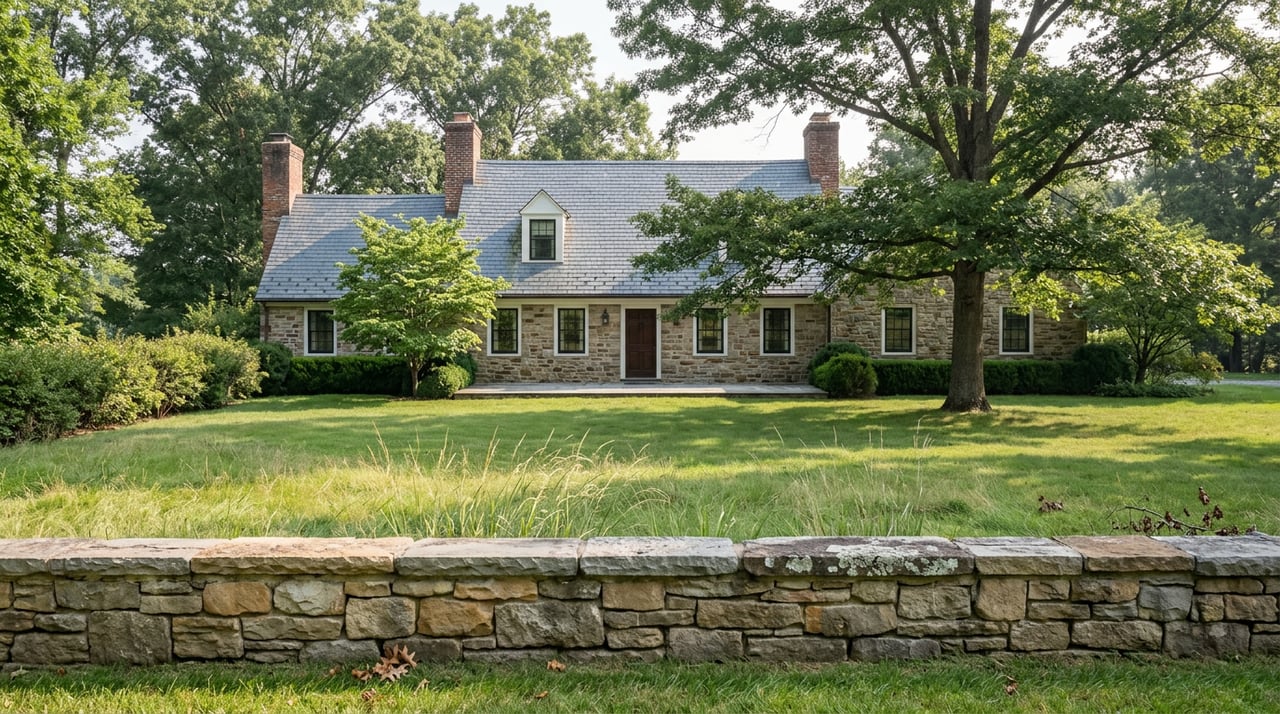
Chadds Ford Township has owned a house since 2018 that it never quite figured out what to do with. The property is Painter's Folly, the Route 1 estate where Andrew Wyeth once painted by the swimming pool and where George and Helen Sipala lived for decades before the township bought it. Now, eight years later, the supervisors are finally moving toward an auction, but not before recording a set of conservation and facade easements with the North American Land Trust to lock in the property's protections first. Township solicitor Mike Maddren has said the easement could be in place this month, with the auction likely to open in October or November.
That sequence, easement first, sale second, is the detail worth sitting with if you own land in Chadds Ford and think you might sell someday. In most suburban markets, the house is the asset and the lot is just where it sits. Here, the land itself often comes with a file. Supervisor Samantha Reiner put it plainly when describing what the easements on Painter's Folly will do: they "provide permanent protection for the property's historic, scenic, and natural resources," and once recorded, they run with the land regardless of who owns it next. That's not language specific to a township-owned showplace. It's the same mechanism attached to a meaningful share of private acreage across Chadds Ford, and it changes how a sale needs to be prepared, priced, and marketed.
The Brandywine Conservancy, headquartered in Chadds Ford since its founding in 1967 to keep a proposed manufacturing plant off the land along the river, now holds more than 500 conservation easements protecting over 70,000 acres across Pennsylvania and Delaware. That's not a rounding error in a township this size. If you own a parcel with rolling pasture, a creek frontage, or a view corridor that's been part of the property's appeal for generations, there's a real chance a previous owner already placed some form of restriction on it, sometimes decades before you bought.
An easement doesn't disappear when a family moves. It's recorded against the deed, and it survives every sale after the one that created it. For a seller, that means the property you're listing may already have limits on subdivision, new construction, or agricultural use baked into the title, whether or not it shows up in casual conversation with a neighbor or in the listing photos. Buyers with strong legal representation will find it during title search. The better move is finding it yourself, months before you list, so it becomes part of the story you tell rather than a surprise their attorney raises during underwriting.
Here's where sellers get caught off guard. An easement can affect what an appraiser is willing to support as fair market value, because it may restrict what a future owner could otherwise do with excess acreage. It can also affect financing timelines if a lender's counsel wants to review the easement document itself before clearing a mortgage. Neither of these is a reason to panic. Chadds Ford's larger, higher-value listings, the ones in the mid six figures and above where lot size and setting are doing real work in the price, are exactly the properties most likely to carry one of these restrictions, and buyers who are drawn to that kind of property are usually drawn to the preserved setting that comes with it. The issue isn't that easements hurt value. It's that undisclosed or poorly explained ones create friction late in a transaction, at the exact moment a deal is most fragile.
The practical fix is straightforward. Before you price a Chadds Ford property with any real acreage, pull the deed history and confirm whether an easement is recorded, who holds it (the Brandywine Conservancy and the North American Land Trust are both active in the township), and what it actually restricts. That document becomes part of your disclosure package, not an obstacle to work around.
Land isn't the only thing in Chadds Ford with a file attached. In 2024, the township took up a zoning rewrite that formally establishes a historic overlay district and a historical architectural review board, known locally as HARB, to review exterior building activity within that district before the Board of Supervisors signs off. If your property sits inside that overlay, and the township's own zoning map still carries a flagged boundary correction in progress (officials have noted an error in the Dilworthtown Historic District boundary that should include 240 Brinton's Bridge Road, with the map update still pending), the honest answer to "am I in it" isn't always obvious from a casual look at the parcel.
This matters for sellers in two ways. First, if you've been planning an exterior renovation before listing, roofline changes, a new fence, an addition, confirm whether HARB review applies before you start, so you're not mid-permit when a buyer's inspection period opens. Second, if your home already falls within the historic overlay, that's a fact buyers will want up front, not discovered when they call the township about a project of their own. Framed correctly, historic designation is often a selling point in Chadds Ford, tied to the same Wyeth-era character that draws buyers to the area. Framed as a surprise, it reads as a liability.
The clearest local example of a restriction catching an owner off guard involves short-term rentals, and it played out publicly enough that the details are on the record. A Smithbridge Road property, once part of a larger estate connected to the du Pont family, drew a neighbor's complaint in 2023 over Airbnb rentals. Chadds Ford officials determined the use violated the township's residential zoning ordinance and issued citations totaling $17,000 before the case reached Magisterial District Court.
Around the same time, a Ridge Road homeowner who had rented her family home through Airbnb since 2016 went before the Zoning Hearing Board seeking a variance to continue, with the board weighing conditions that included a $500,000 liability insurance requirement and a 180-day annual cap on stays. During that same hearing, the chair of the township's Planning Commission said plainly that Chadds Ford doesn't have a strong appetite for short-term rentals as a use. The Smithbridge Road owners eventually sought their own variance to operate as a bed and breakfast instead of a straight rental, and in January 2025, the Zoning Hearing Board denied that request 3 to 0.
The lesson for a seller isn't that short-term rental use is impossible in Chadds Ford. It's that the township's zoning board has a documented, recent pattern of scrutinizing it closely, even on large, well-managed estate properties with genuine privacy from neighbors. If you're marketing a guest house, carriage house, or detached apartment as income potential, confirm what's actually permitted under current zoning before that becomes part of your listing narrative. A buyer who plans their financing around rental income that the township won't allow is a buyer who walks, often late in the process.
None of this should discourage anyone from selling a Chadds Ford property with acreage or history attached. It should change the order of operations. As of August 2026, single-family homes in the township were trading broadly in the $600,000s to well over $700,000, with the estate tier reaching into the low seven figures, and typical marketing time landing somewhere between roughly a month and three months depending on the property and the data source used. That's a market with real depth for the right buyer. But the properties that move cleanly are the ones where the seller already knows what's recorded against the deed, what the historic overlay requires, and what the zoning board will and won't approve, before any of it becomes a question from the other side of the table.
Does a conservation easement lower what I can sell for? Not inherently. It restricts certain uses, but many buyers in this market are specifically drawn to the preserved setting an easement protects. The risk is in disclosure timing, not the easement itself.
Do I have to tell buyers if my home is in the historic overlay? You want to know this before you list regardless, since it affects what a buyer can do with the property and what you may need approval for if you're renovating beforehand.
Can I still market a guest house as rental income? Confirm the current zoning permission first. Recent Zoning Hearing Board decisions show the township reviews short-term rental use carefully, even on estate-sized parcels.
If you're weighing a sale of land, a historic home, or an estate property in Chadds Ford and want to understand what's actually attached to your deed before you price it, Robin M Anderson has spent more than two decades working through exactly this kind of preparation with sellers across the Brandywine Valley. Let's Connect before you list, not after an offer falls through.
Stay up to date on the latest real estate trends.


I provide a hands-on, high-touch approach, guiding every step of your real estate journey with care and expertise. From preparation and marketing to negotiation and closing, I focus on maximizing value and creating seamless experiences. My goal is to deliver exceptional outcomes while building long-term, trusted relationships.